
This year, we asked writers, poets, critics, and professors to choose their favorite Asian American book of 2025. The result was this list: a group of books that embraced ambivalence and complexity. From a poetry collection engaging empire, representational politics, and Apocalypse Now!; to a novel about contested, competitive racial identities; to a memoir about the intersections between war and love, this year’s books leaned into the strange, intimate and uncanny.
These are Soapberry Review’s Best Asian American Books of 2025: we hope you enjoy them as much as we did.

Angel Eye by Madeleine Nakamura
“Angel Eye is a sequel well worth the wait. In its pages, author Madeleine Nakamura builds a unique fantasy world that has reached its own ‘modern times.’ When magic is levied by bureaucracy and conspiracy, intrigue of thrilling proportions is bound to occur. The second book in the Cursebreakers series features its reluctant protagonist, Professor Adrien Desfoueneaux, facing menacing new foes that threaten his relationships to his friends and a potential new lover. Angel Eye continues to balance fantastical magic with realistic conflict, in addition to tackling dark themes with honesty and integrity towards its characters. If you are looking for an adult fantasy series with an openly queer protagonist, excellent representation of mental illness, and no limit to snarky comebacks, Angel Eye and the Cursebreakers series is one you can’t miss out on.” – Sinclair Adams, science fiction writer
Read our review of Angel Eye here.
Becoming Ghost by Cathy Linh Che
“Cathy Linh Che’s sophomore collection Becoming Ghost explores her parents’ time as extras on the set of Francis Ford Coppola’s Apocalypse Now! Through imagined sets, persona poems, and golden shovels that borrow lines from the film, Che transforms ekphrasis into critique—of empire, industry, and representational politics. This critique becomes a vehicle for examining familial estrangement and personal histories; history as a narrative, and the art that comes from it is a point of contention—how are we perceived? Che masterfully depicts the duality in the potential of art—something through which we can understand ourselves or lose ourselves. This, too, maps onto the familial frameworks; where is there love, and where is there harm? In the long title poem ‘Becoming Ghost,’ she writes: ‘I am asking you / to look me in the face / and say, Father. / I am / asking you / to see me,’ playing with various forms of address and the act of seeing/being seen. Though it is a fulfilling work on its own, Becoming Ghost pairs beautifully with Che’s documentary We Were the Scenery dir. Christopher; like the book, it details her parents’ time as extras. It is experimental, a poem of a film. This cross-media experience is recursive—what the documentary shares about Che’s family is only bolstered by the attempts of the collection, and so on. Well deserving of its National Book Award shortlisting, Becoming Ghost is a feat of intertextual poetics, a model with which to re-examine personal narratives and how they reverberate through history, through art, and otherwise.” – Summer Farah, author of The Hungering Years

Bibliophobia by Sarah Chihaya
“Sarah Chihaya’s Bibliophobia, which tracks Chihaya’s own relationship to reading over the course of her life, is a moving account of what it means to build a life in service of literature. After having a breakdown while writing—and being unable to write—her first monograph, the book that her whole life so far in academia has worked towards, Chihaya looks back on the histories of reading that have shaped her experience of place, culture, and the contemporary world as a Japanese American girl growing up in Ohio. Bibliophobia is a relatable and profound meditation on what it means to center literature above all else, and how that might offer us roadmaps to read our lives anew.” – Vika Mujumdar, writer and critic

Cold Thief Place by Esther Lin
“My encounter with Esther Lin’s debut collection Cold Thief Place was the most memorable reading experience in 2025. Lin was born in Brazil and lived in the U.S. as an undocumented immigrant for twenty-one years. Around 1.7 million Asian undocumented immigrants live in the U.S., and her series of poems involving transnational migrations are searing flashes from lives shaped in precarity. I was struck at different moments by the intimacy, frailty, and beauty in her poems, while in awe of the way she made words leap out of the page. The title is taken from Jean Rhys’ Wide Sargasso Sea, spoken by the protagonist’s enslaved nanny when she leaves for England: ‘Why you want to go to this cold thief place?’ What does that story look like in our time, and in an Asian American context? Her poetry was an unexpected answer.” – Rei Magosaki, associate professor of English at Chapman University
Read our interview with Esther Lin here.

Death and Diniguan by Mia P. Minansala
“Death and Dinuguan brings Tita Rosie’s Kitchen mystery series to a deeply emotional close in this heartfelt final installment. No amount of ube crinkles and champorado can make me feel better after finishing the last book of this cozy mystery. Each book in the series tugged on my heartstrings and made me believe I was in the town of Shady Palms. There was no way I was prepared to unravel the heart of family bonds and the strength of community that occurred due to an unfortunate incident of a beloved family member and friend.
Mia P. Manasala weaves backstories and secrets taking readers on a wild journey to solve a murder that only a nosey, good-natured community can do. For the days when I feel gloomy, I will reread this book over and over again.” – Samantha Diaz, marketing and media coordinator at Red Hen Press

The Gate of Memory: Poems by Descendants of Nikkei Wartime Incarceration co-edited by Brynn Saito and Brandon Shimoda
“‘Injustice provokes poetry,’ writes Richard Hamasaki, one of the sixty-eight poets featured in The Gate of Memory: Poems by Descendants of Nikkei Wartime Incarceration, co-edited by Brynn Saito and Brandon Shimoda. Although these poets did not experience wartime incarceration directly, they engage with it indirectly, through their ancestors’ old photographs, occasional words, and pervasive silences. Building on these traces, provoked by a strong sense of injustice, and gifted with imagination, they craft poems in a variety of forms that reflect on their shared past, meditate on the diverse ways that incarcerees processed their experiences, and connect to present-day injustices. Saito and Shimoda gathered poems from well-known writers, as well as from an open call that they issued for this unique and illuminating anthology. The literature of Japanese American and Japanese Canadian incarceration continues to be written, and this volume testifies to its necessity.” – Floyd Cheung, professor of English language & literature and American studies at Smith College and co-editor of The Literature of Japanese American Incarceration
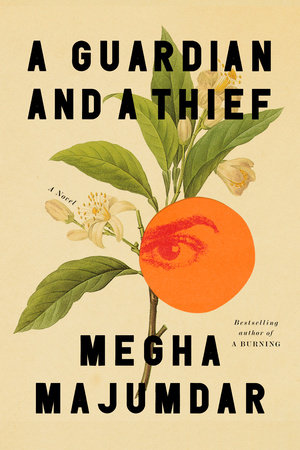
A Guardian and a Thief by Megha Majumdar
“Megha Majumdar’s A Guardian and a Thief is a propulsive, complex novel that shows how social morals and values are challenged in the face of survival. Set in a near-future Kolkata (that honestly mirrors our present), the story follows two central characters, the unnamed “Ma,” a mother trying to get her 2-year old daughter and elderly father on a plane to the U.S., and Boomba, a young man trying to get his family to safety. Boomba steals Ma’s purse containing their passports—what follows is a series of events that weaves together a society’s reactions in such dire, cutthroat circumstances. In alternating POVs, Majumdar swings the pendulum between these characters—who is right and who is wrong. Who is the Guardian and who is the thief? Majumdar’s writing is sparse and exacting, leaving the reader breathless in an effort to keep up with the action. At less than 250 pages, this riveting story feels epic and will linger on rent-free in your head.” – Katrina T. De Los Reyes, writer

Maggie; Or a Man and a Woman Walk into a Bar by Katie Yee
“Nothing in Maggie; Or A Man And A Woman Walk Into A Bar by Katie Yee is what you’d expect, and I love it as much for its tangents as I do for its characters and storyline. A woman goes on a date with her husband only for him to tell her he’s having an affair. She goes to a regular checkup to find out that she has breast cancer. What makes Maggie a best book of the year for me is that the woman grieves by telling Chinese folktales to her children, and naming her tumor Maggie, the name of her husband’s mistress. As you wonder about how the tale of the man on the moon eternally punished to chop down a tree is relevant, the tree returns as a seed and a tumor a hundred pages later. You are astonished constantly by the turns and returns of this book, and there is no better feeling when reading.” – Thu Anh Nguyen, poet
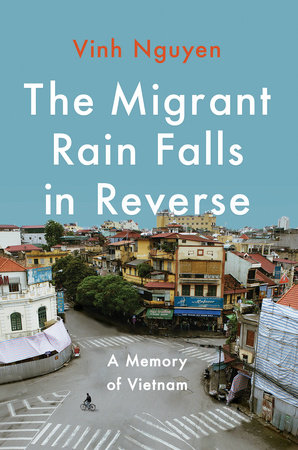
The Migrant Rain Falls in Reverse: A Memory of Vietnam by Vinh Nguyen
“Every year, co-editor Audrey asks me, ‘What is the best book of (insert year) you read this year?’ I usually overthink it, but this year, I had a clear answer: The Migrant Rain Falls in Reverse: A Memory of Vietnam by Vinh Nguyen. While I read a lot of great books, Vinh’s work left me in awe with his words and nuance with memory work. As I am writing my dissertation on violence and Asian American literature, I have this line on sticky note on my laptop that I constantly refer to: ‘Stories of war are, at their core, love stories gone wrong.’ Before reading his words, I could only think of war and love as two separate entities. I have mentioned before that I was not going to buy Vinh’s memoir, but my now-fiancé snuck out to buy it for me. I am so glad that he did.” – Justine Trinh, Asian American literature scholar

Small Scale Sinners by Mahreen Sohail
“In one story in Mahreen Sohail’s collection, Small Scale Sinners, a young, nervous bride sends a group of girls into her yard to play with a goat. Free from supervision, the girls proceed to wrap a rope around the goat’s body, ‘pull[ing] from either end, their faces rapt and gleeful.’ These same girls later ‘sle[ep] soundly next to glasses of water, night-lights firmly on.’ Sohail’s collection deftly considers the innocence and cruelty of girls and young women across twelve exquisite stories. Two sisters recruit stray children to be child soldiers. A churail considers whether she will follow in her mother’s footsteps. A band of schoolchildren taunt a pair of orphaned twins. This is a book about the harms and kindnesses people enact upon one another—and how they are bound together in the same scene; and often, the same gesture.” – Sarah Sukardi, co-editor of Soapberry Review

This Single Road: Postcards and Notebooks from Kyoto by Alan Chong Lau
“Acclaimed painter and poet Alan Lau makes regular trips to Japan with wife Kazuko from their home in Seattle. This Single Road is a recreation of the fragments of daily life in Kyoto that Alan records in inexpensive composition books – poems and essays, sketches and paintings. It’s an intimate peek at the artist who observes life as it comes to him, whether watching a child play during a train ride or stumbling upon a master noodle-maker in the mountains who sells only by subscription but feeds travelers who find him. Some of the paintings burst with color. Others demonstrate the black-and-white restraint of sumi-e. This Single Road is a narrative of meditative moments that add up to a larger whole, and I appreciated the chance to accompany this Buddha Bandit on his journey through the simple pleasures of life in the natural world and the human one.” — Frank Abe, co-editor of The Literature of Japanese American Incarceration
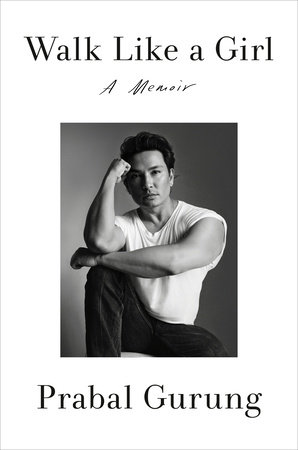
Walk Like a Girl by Prabal Gurung
“Ever since I discovered designer Prabal Gurung in high school, I’ve been a fan of his work, especially the way he uses clothing to explore American identity and belonging. For example, at his 10th anniversary collection, he sent models down the runway wearing sashes reading, ‘Who gets to be American?’, prompting audiences to reflect on their views on immigration, race, and belonging. Similar to his designs, his memoir explores themes of the American Dream and discrimination. While Gurung comes from a privileged background (his mom is a descendant of the Nepali royal family), he doesn’t shy away from sharing the difficult realities of his childhood, such as homophobic bullying, and the discrimination he’s experienced in the fashion industry. For fans of fashion and memoirs, Walk Like a Girl is a must.” – Audrey Fong, co-editor of Soapberry Review
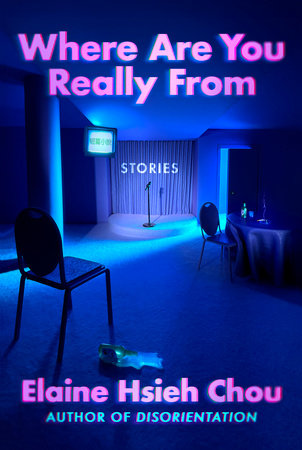
Where Are You Really From by Elaine Hsieh Chou
“Where are these stories really from? A France where our more fabulous doppelgängers live? A Taiwan where schemes of filial cannibalism reside? Or another Taiwan where brides are shipped in boxes via postal? Or an America where a Taiwanese dad watches in resentful envy as his daughter succeeds in all the ways he has failed?
This is an uncanny book, strange but not strange, here but not here, oozing of duality—one person who is another (or another’s), literally and figuratively. Longingly or resentfully, usually both by the end of each story. Quintessentially Taiwanese, Where Are You Really From keeps coming back to contested identities. Characters that are one thing or another or a third, or then some combination of—like all of us Americans from Taiwan—American and Chinese and Taiwanese, depending on who’s asking, each competing with the other in a fierce and loving zero-sum melee.” – Pete Hsu, author of If I Were the Ocean, I’d Carry You Home and winner of the 2025 Granum Foundation Prize