By Samantha Diaz
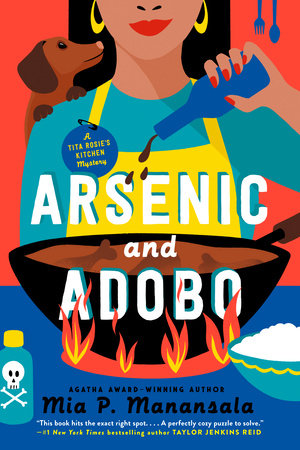
Nothing screams murder like a side of ube cookies.
And that’s something Mia P. Manansala understands well. In her first installment of the Tita Rosie’s Kitchen cozy mystery series, Manansala delivers a hearty dose of humor and hunger along with a whopping plate of ube cookies. Arsenic and Adobo gives delicious plot twists and character introductions that left me hooked on whodunit, while also offering delicious moments of relatability that will appeal to many readers.
The refreshing story was a vacation read for me, and let me tell you, I devoured Manansala’s book. As I sprawled on the beaches of Maui, there were many beautiful sights and sounds, but nothing caught my attention more than this murder mystery. Whether it is Manansala’s master plan to make her readers hungry or not, I had a strong craving for ube after coming across the sweet Filipino yam in the story. So, I walked to the nearest Hawaiian store and grabbed some ube desserts to cozy up on the resort balcony to finish this mystery.
The main character, Lila Macapagal (Mah-cah-pah-gahl), resonated with me in more ways than one. She comes from a small town that just doesn’t meet her big adventure dreams. Like many millennials—including myself—Lila leaves her home in pursuit of something bigger and better, but ultimately moves back home to help the family restaurant, Tita Rosie’s Kitchen. Her Lola and Tita Rosie call her the savior of their business. That is, until a murder happens at their restaurant right in front of their eyes!
Evidence piles up and it all points back to Lila and her family. Desperate to clear the Macapagal name and save the restaurant, Lila sets her sights on finding who the real murderer is. With her unconventional investigation, she learns that the murdered food critic, who happens to be Lila’s ex-boyfriend, has been targeting other restaurants by sharing bad reviews. However, the plot thickens when the reader learns that Tita Rosie’s Kitchen is the unfortunate restaurant in which the ex-boyfriend dies. With a diverse list of restaurants, Lila takes readers on a cultural food journey. Told with delicious descriptions, the author truly takes to heart each food scene. For those who enjoy an array of cultural foods, there sure is a plate that can appeal to anyone, whether you want something savory like chicken adobo or something sweet like ube crinkles (recipes for both are included in the back!). True to the blurbs, Arsenic and Adobo is a mouthwatering novel.
Food, however, is not the story’s only fixation, even though it does play a huge part. The novel is also all about family and life. The main question that rings throughout the novel is: Is it so bad to stay where you grew up? This thought comes up multiple times as Lila journeys further into the mystery. On her quest to solve the murder, she comes across her old hangouts, meets with old friends, and reconnects with her past. The dream to build a life outside her small town of Shady Palms shrinks the more she rekindles her connection to her hometown and realizes the importance of both home and family. Lila’s path is like that of most young adults, who want to break free and live on their own. I admit to having the same desire, only to end up in the same boat as Lila—living back at home. What Manansala does extremely well is conveying those thoughts and ideation throughout the story without overshadowing the murder. Family and life are clear themes that run throughout the novel.
In this multicultural, multigenerational story, Manansala invites a wide demographic to relate to Arsenic and Adobo. As Lila internally juggles the pros and cons of staying in Shady Palms, she openly accepts her American upbringing and uses it as a reason to justify leaving the small town. With aunts, cousins, and family friends inserting themselves into Lila’s life, she clings to the idea that she can leave even more and live a peaceful life without her loved ones hovering. Like I said before, many young adults are enamored with the idea of living away from family including myself, making it a relatable read. The novel effortlessly reveals the roller coaster of emotions between moving away or staying home that many of us experience. However, while investigating the murder, Lila finds that the Filipino culture and food that are so important to her family warm her heart during a time of trauma.
Arsenic and Adobo find its strength in its relatability from its exploration of the desire to move far away from home to its depiction of family dynamics and conversation about language. We all understand that as close as someone can be to their culture, language can still get lost throughout generations. While Lila understands Tagalog, she has a hard time speaking it. Similarly, other characters voice their struggles with their second language as well. Through Lila and these characters, this multigenerational story thoughtfully explains the commonality of lost tongue. As a second-generation kid myself, I know little of my own cultural language. Like Lila, I can understand more than I can talk. To read a story that weaves in generational guilt and struggles reminds me that I am not the only one who feels this way.
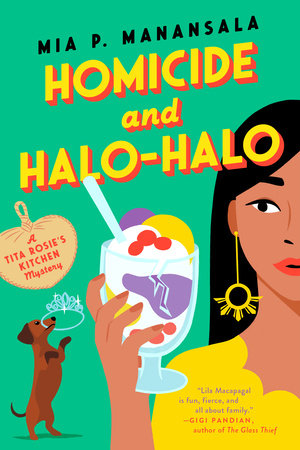
If a novel can make someone hungry, then Arsenic and Adobo does it well. Not only can readers salivate over the food, but they can also devour the twists and turns of the murder mystery and revel in the moments of relatability that Manansala so expertly weaves in. The best part is that if you enjoy this novel as much as I did, there are two more within this series – Homicide and Halo-Halo and Blackmail and Bibingka. Go ahead – treat yourself to some cookies and a good mystery; Arsenic and Adobo invites you.
Arsenic and Adobo is available from Barnes & Noble, Blue Cypress Books, Bookshop, The Last Bookstore, Loyalty Bookstore, and Talking Leaves.

Samantha Desirae Diaz is a writer who explores true crime, paranormal, and romance stories. Born and raised in Chino, CA, she earned her B.A. in screenwriting from California State University, Northridge, and is currently pursuing an M.F.A. in creative writing from Chapman University.